Tempo traveller or bus? The per-head crossover point
· 7 min read
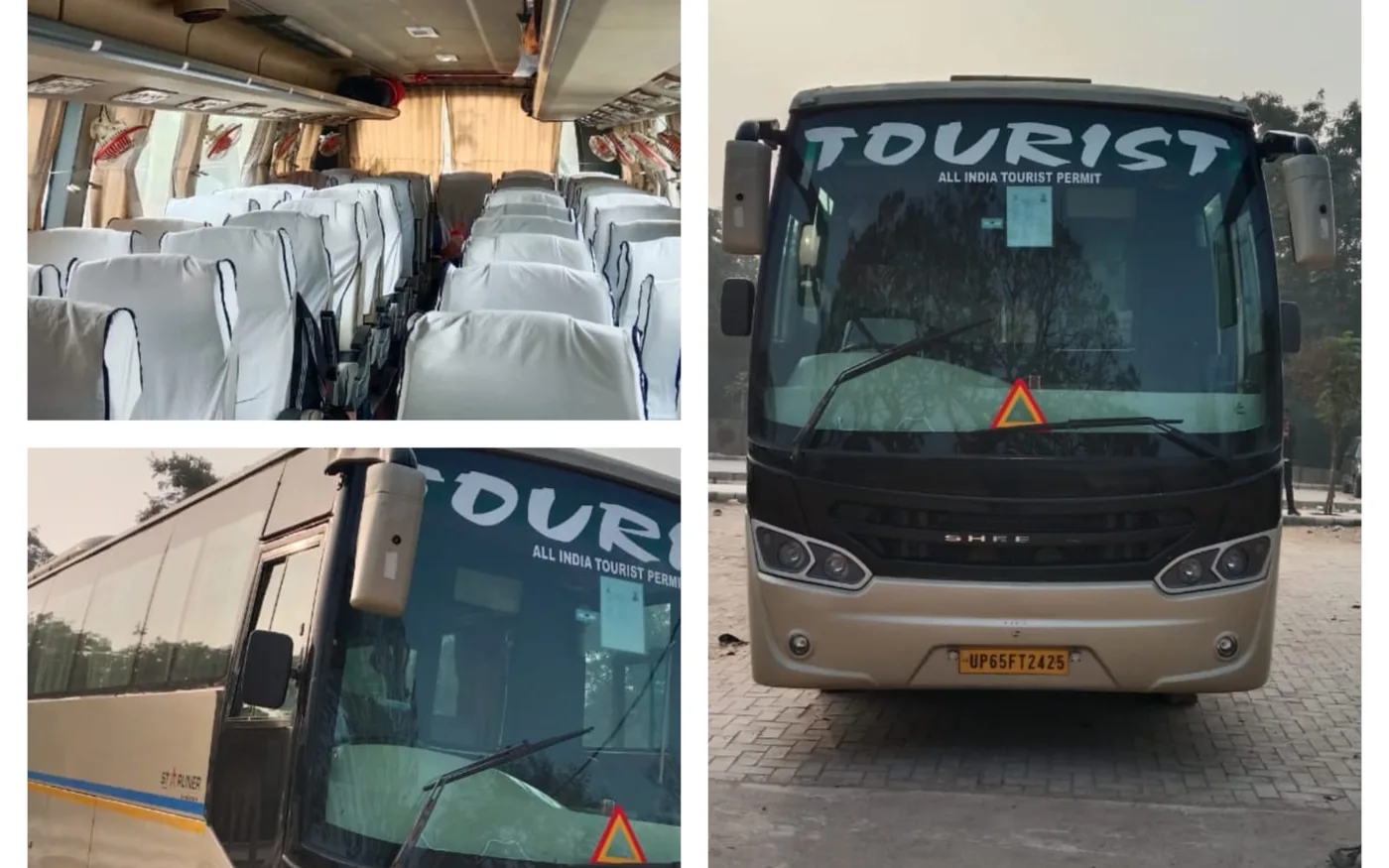
There is a size at which booking multiple tempo travellers stops making sense, and almost nobody books across it deliberately. The instinct is that a bus is an escalation. On a per-passenger basis it is the opposite.
The crossover, in one table
| Vehicle | Seats | Per km | Per seat / km |
|---|---|---|---|
| Tempo Traveller 12 | 12 | ₹24 | ₹2.00 |
| Tempo Traveller 17 | 17 | ₹23 | ₹1.35 |
| Tempo Traveller 20 | 20 | ₹24 | ₹1.20 |
| Tempo Traveller 26 | 26 | ₹30 | ₹1.15 |
| Luxury Bus 40 | 40 | ₹47 | ₹1.18 |
| Luxury Bus 45 | 45 | ₹51 | ₹1.13 |
| Luxury Bus 49 | 49 | ₹57 | ₹1.16 |
Per-seat cost falls steeply from the 12-seater to the 20-seater and then flattens. From the 20-seater upward everything sits between ₹1.13 and ₹1.20, which means above twenty people the decision stops being about money and starts being about access and logistics.
A worked comparison at 45 people
Say a 250 km day for forty-five people.
| Option | Vehicles | Vehicle cost | Driver allowance | Total |
|---|---|---|---|---|
| Three 17-seaters | 3 × ₹23/km | ₹17,250 | 3 × ₹350 | ₹18,300 |
| Two 26-seaters | 2 × ₹30/km | ₹15,000 | 2 × ₹400 | ₹15,800 |
| One 45-seater bus | 1 × ₹51/km | ₹12,750 | 1 × ₹600 | ₹13,350 |
The bus is about ₹4,950 cheaper than the tempo travellers on a single day, and the gap compounds across a multi-day trip. It also arrives as one group rather than three, which for a wedding or an institutional trip matters more than the money.
The 45-seater at ₹1.13 per passenger per kilometre is the cheapest seat in our fleet. If your group genuinely fills it, nothing else comes close.
When the maths is wrong
Three situations override the per-head arithmetic entirely.
- Empty seats. A 45-seater carrying thirty people is ₹1.70 per head, worse than a 26-seater. The figures only hold when the vehicle is full.
- Old-city access. Buses of 40 seats and up cannot enter Varanasi's inner lanes. They park at Godowlia or Maidagin and the group walks — which for forty people means a headcount and twenty extra minutes each way.
- Split schedules. If half the group needs to leave at a different time, one vehicle becomes a constraint rather than a saving. That is when two tempo travellers genuinely win.
The practical rule
Under twenty people, take the tempo traveller that fits — the 17-seater is the sweet spot and is cheaper per kilometre than the 12-seater. Between twenty and thirty, the 20 or 26-seater keeps you out of the bus access problem for almost the same per-head cost. Over thirty-five and travelling together, take the bus and plan the parking.
What nobody tells you about bus days
Build an extra thirty minutes into every city leg. A 49-seater moves slowly through Varanasi's chokepoints, and a schedule written for a car will slip by mid-morning and stay slipped. That is not a fault of the vehicle; it is the cost of moving forty-nine people at once.
Common questions
- Is a bus cheaper than tempo travellers for a large group?
- Yes, above about thirty-five people. A 45-seater at ₹51/km is ₹1.13 per passenger per kilometre against three 17-seaters at ₹1.35 — roughly ₹4,950 less on a 250 km day for forty-five people.
- At what group size should I book a bus in Varanasi?
- Over thirty-five if the group travels together. Between twenty and thirty a 20 or 26-seater tempo traveller costs almost the same per head and avoids the old-city access problem entirely.
- Can a bus enter Varanasi's old city?
- No. Buses of 40 seats and up park at a designated point such as Godowlia or Maidagin, and the group walks the final stretch. Build in twenty extra minutes each way and a headcount for a large group.
Know what you need?
Every rate is on the page — call or send the dates and we quote off the same card.